


How Glaucoma Quietly Alters Your Peripheral Sight (and How We Fix It)
Glaucoma rarely announces itself. No flash of pain. No sudden blur. Most people feel nothing at all while the disease works in the background.
That silence is the problem. By the time someone notices they cannot see things off to the side, damage has already settled in. The good news? Modern care can slow it down. The key is catching it early.
What Glaucoma Actually Does
Glaucoma is not one disease. Think of it as a family of eye conditions, all with the same target. The optic nerve. That is the cable running from your eye to your brain, carrying everything you see.
Open-angle glaucoma tops the list here in the United States. You will hear that name most often. Angle-closure and congenital forms are rarer, and they tend to arrive faster.
Damage usually begins in the fibers that handle peripheral vision. Those fibers sit at the outer edges of the visual field, and they tend to fail first. Blind spots form where you once saw movement. Vision loss creeps along so gradually that most people never notice the shift. Half of those with glaucoma have no idea they have it.
Why You Do Not Notice It
Central vision holds up well for a long time. Reading a book. Watching television. Recognizing a face. All of that can stay normal while the edges of your sight quietly erode.
The brain helps hide it too. It patches over gaps, so the visual world still feels complete even when pieces are missing. That is why so many cases turn up during a routine exam and not in a moment of sudden realization.
The Daily Cost
Peripheral vision does more than people give it credit for. It catches motion. It guides navigation. It keeps you aware of what is happening around you. Lose it, and driving becomes risky. Walking through a crowded store gets harder. Even reaching for a cup on your side can catch you off guard.
What Raises the Risk
Anyone can develop glaucoma. Certain factors push the odds higher.
Age matters. Risk climbs after 40. It climbs further after 60. Family history plays a role too. If a parent or sibling has it, your risk goes up, because the condition often runs in families. African American adults over 40 face a higher risk. So do Hispanic and Latino adults over 60.
Medical conditions add to the picture. Diabetes raises the risk. So do high blood pressure and heart disease. Long-term use of corticosteroid medications belongs on that list too, whether drops, pills, or inhalers. High nearsightedness and a history of eye injury round it out.
How It Gets Found
There is no way to prevent glaucoma, but there is a way to catch it.
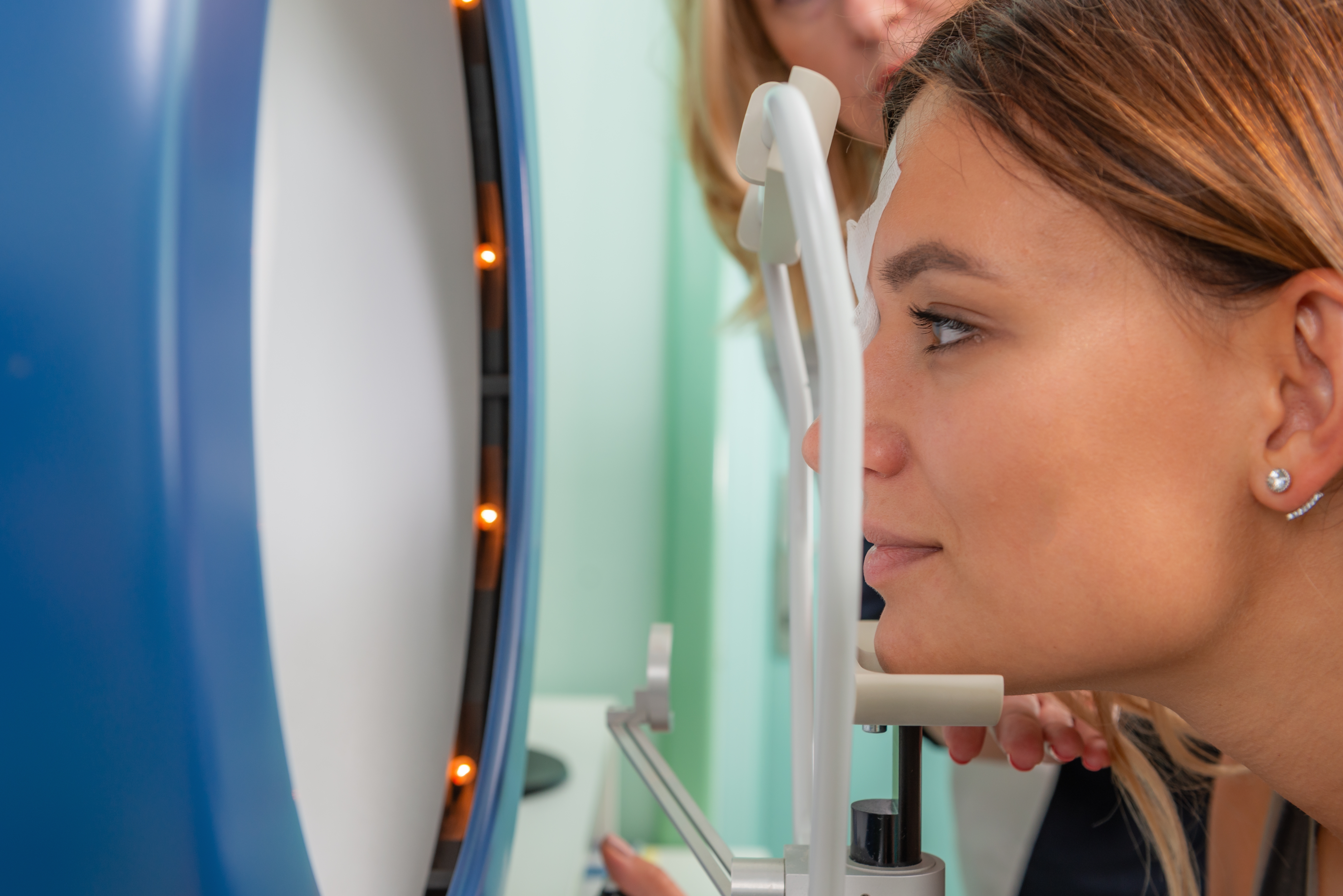
A comprehensive dilated eye exam is the standard. The doctor uses drops to widen the pupil, then takes a close look at the optic nerve. A visual field test comes next. It checks your side vision, which is exactly where early loss shows up.
How often should you go? Every one to two years if you are at higher risk. That schedule matters. Early treatment can stop the damage from progressing.
How We Treat It
No cure exists. Treatment cannot undo damage already done. What it can do is slow or stop further loss. That protects the vision you still have.
Eye drops are the most common starting point. They bring down pressure inside the eye, which eases strain on the optic nerve. Taken daily, they do their job quietly.
Laser treatment is another option. A doctor uses a laser to help fluid drain more easily. It happens in the office. It takes little time.
Surgery comes next if drops and laser are not enough. Several procedures can improve drainage. Your doctor will discuss which fits your case.
Angle-Closure Warning Signs
Most glaucoma is slow and silent. Angle-closure glaucoma is the exception. It is a medical emergency.
Watch for intense eye pain. Nausea. A red eye. Sudden blurry vision. If these appear, get help immediately. Do not wait for a regular appointment.
Living With the Diagnosis
A diagnosis can feel heavy, but it does not have to define your life.
Take your drops every day. If side effects show up, tell your doctor. Do not just stop on your own. Keep your checkups. If daily tasks get harder, ask about vision rehabilitation services and devices that can help.
And talk to your family. Glaucoma often runs in families, so relatives should get checked too.
For more on how glaucoma alters your peripheral sight, visit Mayo Family Eye Care, LLC. Our office is in Exeter, New Hampshire. Call (603) 778-7145 to book an appointment today.


MAP
© 2026 Mayo Family Eye Care, LLC. All Rights Reserved. Accessibility Statement - Privacy Policy - Sitemap
Powered by: 